In one of my usual semi-humorous rants with a friend I realized that every leader in Lebanon essentially has an 80's song dedicated to them in regards to this conflict. As a result I have compiled a playlist for everyone's favorite Lebanese politicians!
The whole conflict can be summed up by "red skies at night" by the fixx
The Government, summed up by "She's A Man Eater" by Hall & Oats:
Al Mustaqbal's Faoud Sanoria and Saad Hariri: "Relax" by Frankie Goes to Hollywood
The PSP's Walid Jumblatt is: "You spin me right round baby right round" by Dead or Alive
The Lebanese Force's Samir Geagea is "Let it Whip" by the Dazz Band
Kataeb's Amine Gemayel is "One Thing Leads to Another" by the Fixx
Reason's behind selection:
Government: Describes how Hizbollah is trying to "chew them up"
Mustaqbal: first line of the song, "relax don't do it...when you wanna come." Describes the militia, and the lack of prowess Saad and Sanoria have so-far shown.
Jumblatt: Come on! that should be self explanatory, even the name of the band describes the
Druze position in the Chouf.
LF: Hizbollah is scared out of it's mind of the LF and the Christian fighters, while Geagea isn't advocating that his groups go out and attack the enemy, he's waiting for them to try something.
Amine: He's waiting on the lines with many of the Kataeb supporters, still trying to push the Gvt. Line..."you'll run for cover...Why don't they say what they are...Do what they mean...One thing leads to another."
The "Opposition" (citrus colors included); If they were Riverdance we would call them "Lords of the Coup"
Amal's Nabbieh Berri: Love Is A Battlefield by Pat Benatar
The SSNP's 3ali 2anso: "Turn Me Loose" by Loverboy
Hizbollah's Hasan Nasrallah: "Burning Down the House" by Talking Heads
the FPM's Michel Aoun: "Out of Touch" by Hall & Oats
al Marada's Suleiman Franjieh Jr.: "Video Killed the Radio Star" by the Buggles
Reasons Surrounding Selection:
Mr. Berri: Has always demonstrated his loyalty to his Damascene masters! Love like that usually results in fighting with your sugar daddy's enemies!
The SSNP: I hate to bestow a good song on such a group of fools. 1. come on their whole ideology is a Levantine version of the Nazi Party, but better yet, the song represents their main goal as a "party" to just be turned loose on democratic organizations or ...Hm...NEW STATIONS AND NEWSPAPERS!
Good ole' Hasan: Song is self explanitory, need I remind anyone of the Sayyed's pledge to, "not use his arms on Lebanese"?
General Aoun: Mr. Nationalist is still siding with the coup currently in place and he actually believes that he is the only one keeping the peace in the Christian areas. Quick summation: Psycho!
Mr. Franjieh: My favorite song to select, because he likes to say he is a new face of Lebanese leadership, meanwhile he is just the same version of a morribund system involving zuama with their village based patronage system. Reasons I selected the song: It's an 80s classic about how VHS and technology were taking over from the "old school" radio stars. Nonetheless in retrospect (from 2008) people still giggle because VHS tapes have been obscelete since the mid 1990s...Essentially it's the not so modern replacing the already ancient, but casting itself as something BRAND NEW!
The "Neutral Army"
"Big Time" by Peter Gabriel describes the Army
Gen Suleiman: "So Caught Up In You" by .38 special
Army Selection:
The Army can now finally find it's place in the neutral sun, disarming and disobeying the govt. while forming a closer connection with their buddies in Hizbollah---They are BIG TIME now!
The OTHER (other then Aoun) General is so caught up in Hizbollah and letting them keep their arms (hence the .38 special band name---didn't that fit perfectly?!) that he will probably be their post-military coup selection.
Other Notable Personalities:
Wafiq Shaqir: "Somebody's Watching Me" by Rockwell
© All Rights Reserved; www.ArzelJabal.blogspot.com
Showing posts with label Lebanese Forces. Show all posts
Showing posts with label Lebanese Forces. Show all posts
Monday, May 12, 2008


Thursday, April 3, 2008
First Post In Three Months!
How does one keep up with Lebanon news?! There were loads of things I could have stuck up here. I'll need to apologize yet again for my gross negligence of Arz el Jabal, but like the phoenix this page will rise again (did everyone get the allusion I made there?)! I guess I will give a quick run through of some interesting Lebanese related things that have happened to me:
For every book I will write a short review and give a rating with stars (5 being the highest and 1 being the lowest)
The Emergence of the South Lebanon Security Belt: Major Saad Haddad and the Ties with Israel, 1975-1978 by Beate Hamizrachi
Rating: ***** (5 Stars)
Essentially the title of Beate Hamizrachi's book says it all. The 186 page book covers Christian militia connections with Israel not just in the south of Lebanon but interestingly touches on early connections made by 'northern' groups (mostly located in the Kesrowan/Mt. Lebanon area). Hamizrachi doesn't take a particularly sympathetic look at Saad Haddad or his leadership in the south. Instead she tries to give a very unbiased play by play look at his service in the Lebanese Army, the plight southern villages were under due to the PLO/Leftist forces and eventually why Haddad decided to side with the State of Israel. Hamizrachi gives incredibly detailed accounts of battles that occurred in the south, going so far as to describe the weapons used, the number of troops deployed, and the socio-political realities surrounding it--She really doesn't mince words. Especially riveting was her use of personal interviews with Haddad. In Israel Haddad was a sort of celebrity so many Israeli interviews exist with him, however, from her writing you can tell Hamizrachi devoted much time and effort to the interviews and received great first hand accounts. Obviously if you are going to study the SLA, "Free Lebanon", or the Israeli Security Zone this book is a must have, additionally the book adds to the knowledge base on north-south (Christian) relations during the war and on the contributions by the Shia to the zone.
© All Rights Reserved; www.ArzelJabal.blogspot.com
- I met Samir Geagea (in NYC) and asked him a few questions.
- Have a few new reviews (see below) for academically based Lebanon books (many that don't receive enough attention and usually cost $50 on Amazon).
- Learned to make labbneh in a one room studio apartment using Dannon yoghurt and some cheese cloth.
- I am writing feverishly (when I don't have class or the subsequent papers that come along with it) on the whole fun topic of Lebanon (and its politics).
- I plan on making another trek back to "Liban" this summer (who knows when), as they say, "n'challah" it works out!
For every book I will write a short review and give a rating with stars (5 being the highest and 1 being the lowest)
The Emergence of the South Lebanon Security Belt: Major Saad Haddad and the Ties with Israel, 1975-1978 by Beate Hamizrachi
Rating: ***** (5 Stars)
Essentially the title of Beate Hamizrachi's book says it all. The 186 page book covers Christian militia connections with Israel not just in the south of Lebanon but interestingly touches on early connections made by 'northern' groups (mostly located in the Kesrowan/Mt. Lebanon area). Hamizrachi doesn't take a particularly sympathetic look at Saad Haddad or his leadership in the south. Instead she tries to give a very unbiased play by play look at his service in the Lebanese Army, the plight southern villages were under due to the PLO/Leftist forces and eventually why Haddad decided to side with the State of Israel. Hamizrachi gives incredibly detailed accounts of battles that occurred in the south, going so far as to describe the weapons used, the number of troops deployed, and the socio-political realities surrounding it--She really doesn't mince words. Especially riveting was her use of personal interviews with Haddad. In Israel Haddad was a sort of celebrity so many Israeli interviews exist with him, however, from her writing you can tell Hamizrachi devoted much time and effort to the interviews and received great first hand accounts. Obviously if you are going to study the SLA, "Free Lebanon", or the Israeli Security Zone this book is a must have, additionally the book adds to the knowledge base on north-south (Christian) relations during the war and on the contributions by the Shia to the zone.
© All Rights Reserved; www.ArzelJabal.blogspot.com
Friday, January 4, 2008
Syria’s Assassination Goal: Target March 14th Christians To Divide & Conquer: Article Published
Happy New Year everyone! I had another article published, this time by the Counterterrorism Blog. It was the first one posted for 2008. Enjoy:
http://counterterrorismblog.org/2008/01/syrias_assassination_goal_targ.php
© All Rights Reserved; www.ArzelJabal.blogspot.com
http://counterterrorismblog.org/2008/01/syrias_assassination_goal_targ.php
© All Rights Reserved; www.ArzelJabal.blogspot.com
Saturday, October 27, 2007
Currently Working On:
My posts have become much more erratic now that I am back in school and not in Lebanon. Nevertheless, I am writing a 9-10 page piece on the Lebanese Forces and how its grown and changed over the past 30 years. I am planning on getting this one published, when that is accomplished I will put it up here for all to enjoy (or ridicule)!
© All Rights Reserved; www.ArzelJabal.blogspot.com
© All Rights Reserved; www.ArzelJabal.blogspot.com
Thursday, August 2, 2007
The Phalangists of Sassine Square
 This area of Beirut is both scenic, orderly, and quite a location for those Francophones out there. There is a Starbucks, the luxurious ABC mall, $1.5 million apartments and many honking cars, welcome to Sassine Square in Achrafieh. Achrafieh, the mainly Christian area of Beirut is a hotbed of commerce and most of all, of politics, in the middle of the square is a memorial to Bachir Gemayel. The Kataeb Party, also called the Phalanges, is based here. While secular on paper it draws much of its support from Maronites and many Greek Orthodox. To many Christians it is seen as the vanguard of their cause.
Pierre Gemayel the Nationalist & Kataeb
The party is also home to the Gemayel dynasty. The Gemayel family had been prominent Maronites and were an extraordinarily political family since the 1500s. The founder of Kataeb, Pierre Gemayel was once sentenced to death (as was his father and uncle) by Ottoman authorities for supporting an independent Lebanon. Gemayel also tired to launch a revolt against the French Mandate in 1943. The nationalistic Pierre Gemayel once said, "If my death would bring peace to this land, then wrap me in the Lebanese flag and burn me beneath the cedars."
Even though Pierre Gemayel had influence, Kataeb was still a minor party in the Lebanese poltical scene. Only in 1958 when Gemayel supported Camille Chamoun against pan-Arabist forces (led by Kamal Jumblatt, Walid Jumblatt's father) was he finally awarded with more power.
As with many Maronite and Christian parties, Kataeb considered Lebanese Christians to be a separate ethnic group from Arab Muslims. Kataeb, and its founder never supported Lebanon's inclusion in pan-Arab movements, such as the Arab League. Pierre, while an advocate and supporter of Palestinian rights, felt that the "Arab cause" (ie the Palestinian cause) only weakened Lebanon and drew it into more wars.
In the 1970s when militarism spread like wildfire through Lebanon, Kataeb was one of the main Christian parties to organize a militia and a military planning group, which was referred to by Kataeb higher-ups as, "the Security Council." Pierre Gemayel even played a role in the start of the Lebanese War.
Lebanon's War
In 1975, because of his right wing leanings and his aversion to Palestinian influence in Lebanon, Palestinian groups (this is speculation on my part, the gunmen were unknown) tried to have him assassinated (that operation killed four people) and then launched mortars into Christian areas of Beirut. Following his attempted assassination, Kataeb militiamen fired on a bus carrying DFLP/PFLP (Democratic Front for the Liberation of Palestine/ Popular Front for the Liberation of Palestine) members killing 27-30. Many say the bus occupants were armed, but others disagree.
 During the war the party had many distinct attributes. For starters it was the lead organization in the Lebanese Front and later the Lebanese Forces. Pierre Gemayel's son, Bachir Gemayel was both the leader of the Lebanese Forces, and then in 1982 became the president elect of Lebanon. Bachir was known for his Machiavellian tendencies, and soon he and Kateab dominated the Lebanese Front/Forces. Later in September, 1982 a Syrian bomb (planted by the SSNP) ripped through Bachir Gemayel's meeting in Achrafieh, killing him and many others.
In 1975, because of his right wing leanings and his aversion to Palestinian influence in Lebanon, Palestinian groups (this is speculation on my part, the gunmen were unknown) tried to have him assassinated (that operation killed four people) and then launched mortars into Christian areas of Beirut. Following his attempted assassination, Kataeb militiamen fired on a bus carrying DFLP/PFLP (Democratic Front for the Liberation of Palestine/ Popular Front for the Liberation of Palestine) members killing 27-30. Many say the bus occupants were armed, but others disagree.
 During the war the party had many distinct attributes. For starters it was the lead organization in the Lebanese Front and later the Lebanese Forces. Pierre Gemayel's son, Bachir Gemayel was both the leader of the Lebanese Forces, and then in 1982 became the president elect of Lebanon. Bachir was known for his Machiavellian tendencies, and soon he and Kateab dominated the Lebanese Front/Forces. Later in September, 1982 a Syrian bomb (planted by the SSNP) ripped through Bachir Gemayel's meeting in Achrafieh, killing him and many others.
During the war the Lebanese Forces and Kataeb sought covert funding and arms from Israel. Even today many Christians are pro-Western and pro-Israel. Originally in 1976 the LF supported Syria's intervention in Lebanon against Palestinian and leftist forces. Later (around 1978), the LF reversed its position and saw Syria not as a liberator but what it was actually doing, using the war as an excuse for occupying Lebanon. The LF fought a protracted war against the Syrians and in 1978 actually won many battles. However, after numerous internal power struggles, and fighting against opposing Lebanese militias and the Lebanese Army, commanded by Michel Aoun, Kataeb and the Lebanese Forces were crushed.
Its interesting to note that the Lebanese Forces used to be considered an armed wing of Kataeb. After an internal coup launched by Elie Hobieka (the same man who carried out the Sabra and Chatilla massacres against the Palestinians) and Samir Geagea (pronounced JaJa), and then another coup which displaced Hobieka (mainly because of his signing of the Tripartite accord and his closeness to Syria), Samir Geagea transformed the Lebanese Forces into a separate political, militia, and patronage group. In the 80s and 90s (especially during Syrian occupation) Kataeb was dramatically weakened. Only following Syria's pullout did Kataeb have a resurgence in influence when they first joined the Qornet Shehwan Gathering, a mainly anti-Syrian grouping.
I had always been interested in the Kataeb party. Many Western commentators describe it as "Fascist," because of its modeling after Fransisco Francos Phalanges, and heavy use of the Roman salute. From my own research, the party seems is most definitely not Naziesque. The main reason for the name, salutes, and other quasi-Fascist aspects of the party arouse from Pierre Gemayel's admiration of the strength shown by European Fascist groups, a unity of strength rarely seen in sectarian ridden Lebanon. Economically Kataeb is most definitely not Fascist, it is more along the lines of a Labour or Christian Democratic style party in Europe.
Christian Isolation, Western Guilt & The Metn Meltdown
I visited "Bayt Kataeb" (Kataeb House) in Achrafieh a number of times over the past week. The offices are located in a white house with green shutters. On top of the house is a large poster of Bachir Gemayel, towards the middle there is a huge cut out image of Bachir Gemayel. A stylized triangular cedar tree is a symbol all over. Before one approaches Bayt Kataeb there is a collection of 6 mulberry trees in rows of 3, parallel from each other. This exact location was the site of Bachir Gemayel's murder in 1982. An illuminated torch, a wall with "Wanabqa" (we will always be here; this refers to Christians in Lebanon) written on it, and a brass plaque mark the site where he and others fell due to a Syrian bomb. To many Christians Bachir is a hero, and remains what could have been the solution to Lebanon's problems in the early 1980s. The common phrase heard is "Bachir Hay Fina" (Bachir lives inside of us).
The staff of Kataeb is incredibly pro-Western. As an American I was thanked numerous times for the support America gave to Lebanon. At the same time however these Lebanese also voiced their anger that Lebanon had been used as a bargaining chip in the "game" of Middle East politics. I was asked a number of times what Americans thought about Lebanon, "did they think it was all bombs?", "why do Americans not support us? We are Christians" said another. I met an older, bohemian looking man who was an elite fighter with the Lebanese Forces before Samir Geagea took control of it. He spoke no English but he smiled at me, you could see the tension in his eyes when I mentioned I was living in Hamra (a mainly Muslim area of West Beirut). After years of fighting, the Muslims were still his enemy. I was asked a number of times when America or Israel would start supplying the Christians with weapons, I could do nothing more than say, "America wanted the area to be stable", and ask "why would you need the weapons?" The answer I got wasn't the aggressive one I had originally expected, "we need to protect ourselves, many Muslims, especially Nasrallah, don't want Christians to be in Lebanon anymore." The main thing I kept hearing though was that, "Christian Lebanon is a light to the Christians of the Middle East, we are the only sizable number left, we give the other Christians hope."
I thought a lot about the awful press Kataeb and its fellow Christian parties received following events such as the Sabra and Chatilla massacre (carried out by Kataeb commander Elie Hobieka), and the things written about them by authors such as Robert Fisk. I believe much of it has to do with "Western guilt." We as Westerners feel guilty about our colonial/imperialistic/corporate mindset/history and so we beat ourselves up for it, often seeing forces that our are complete enemy (take the PLO or Hizbollah) sympathetically. We choose to ignore the injustices our actual enemy is doing, simply because we feel guilty in doing so.
Kataeb has been pro-Western, its supporters identify themselves with the US and France, nevertheless Americans see the Sabra and Chatilla massacres and are completely disgusted by Kataeb. However, many Americans haven't even heard of massacres commited by Syrian groups or the Palestinians. There were many, such as the Damour Massacre (600-800 were killed, and a village was destroyed), or the Massacre in Chekka (hundreds were killed).
Even Muslim on Muslim massacres were barely covered, for instance there was a second Sabra and Chatilla massacre carried out by Shi'ite Amal fighters, up to 1200 Palestinians were killed, that's many more dead than in the Kataeb massacre of the Palestinians. If you ask many American intellectuals (especially in the group I am with here at LAU) who the Phalange were the typical answer is, "a bunch of crazed nazi Christians who murdered Palestinians." Whey you ask them about the other massacres, especially those against Christians, it is simply written off. Am I condoning Hobieka's or some in Kataeb's actions? Most definately not! The murder of innocent people is a deplorable act, and yes, many Christians feel as though the Palestinians deserved it. However, I am trying to be far more objective than many Middle Eastern "expert" popinjays, who want to make the Middle East into a "black and white", "good (represented by terrorist groups such as Hizbollah or the PLO) vs. evil (Kataeb, Israel, or even the United States)" world.
The other reason I was at Bayt Kataeb was because of the Metn elections. Metn is an area that encompasses portions of East Beirut up through Bikfaya. The reason there are elections is because the MP from the area, Pierre Amine Gemayel, was assassinated by pro-Syrian bullets in his car. His father, former Lebanese president Amine Gemayel was running to takeover his murdered son's seat. Almost out of the blue, Michel Aoun's Tayyar movement contested the seat by running Camille Koury. To many this was doing Pierre Amine Gemayel's murderers a service. Tayyar is now in the pro-Syrian camp (along with Hizbollah, Bachir Gemayel's killers---the SSNP, Amal, and Franjieh's Marada), it was Syria's goal to knock off as many March 14th politicians as possible.
The elections are planned for August 5th (a day after I leave to go back to the US) and many have speculated they will turn violent. For instance in Sassine there was a Kataeb/Ouwet (Lebanese Forces) convoy of cars with flags waving. As the stopped some Tayyar members tried to beat up the Kataeb supporters. Fist fights are becoming a common occurance. This all reminded me of the December 2006-Febuary 2007 protests that ended up in sporadic violence.
The situation isn't helped by the fact that both sides have armarments. In one instance I was shown a collection of AK-47s by one of the parties, and was then requested, semi-jokingly to "tell George Bush we need more." There was some glimmer of hope out of all of the troubles, while talking to a younger member of Kataeb, I asked if he hated Michel Aoun and his followers, he answered, "they are my cousins, my aunt, my uncle, we can't just go kill them." The Christians of Lebanon are, for lack of better terms, split down the middle. I talked to a pollster friend in Bikfaya (the main area where the election will be held) and so-far it was 49% favoring Michel Aoun and 51% in favor of Gemayel. The closer these numbers get, the more tension will result. Already most Lebanese are anticipating a huge amount of violence. If Aoun wins this seat, his ultimate goal, the presidency of Lebanon is his for the taking.
Here is a movie I made of Bayt Kataeb. I didn't film/wasn't allowed to film the building for security reasons.
This is a short clip I took inside an old Mercedes cab, it shows the Hizbollah/Tayyar/Amal/SSNP/Marada protest in the downtown area. If you look closely, you can see orange flags (Tayyar's color) with the Omega symbol on it. In addition some yellow Hizbollah flags are present.
Pictures:
I had always been interested in the Kataeb party. Many Western commentators describe it as "Fascist," because of its modeling after Fransisco Francos Phalanges, and heavy use of the Roman salute. From my own research, the party seems is most definitely not Naziesque. The main reason for the name, salutes, and other quasi-Fascist aspects of the party arouse from Pierre Gemayel's admiration of the strength shown by European Fascist groups, a unity of strength rarely seen in sectarian ridden Lebanon. Economically Kataeb is most definitely not Fascist, it is more along the lines of a Labour or Christian Democratic style party in Europe.
Christian Isolation, Western Guilt & The Metn Meltdown
I visited "Bayt Kataeb" (Kataeb House) in Achrafieh a number of times over the past week. The offices are located in a white house with green shutters. On top of the house is a large poster of Bachir Gemayel, towards the middle there is a huge cut out image of Bachir Gemayel. A stylized triangular cedar tree is a symbol all over. Before one approaches Bayt Kataeb there is a collection of 6 mulberry trees in rows of 3, parallel from each other. This exact location was the site of Bachir Gemayel's murder in 1982. An illuminated torch, a wall with "Wanabqa" (we will always be here; this refers to Christians in Lebanon) written on it, and a brass plaque mark the site where he and others fell due to a Syrian bomb. To many Christians Bachir is a hero, and remains what could have been the solution to Lebanon's problems in the early 1980s. The common phrase heard is "Bachir Hay Fina" (Bachir lives inside of us).

The staff of Kataeb is incredibly pro-Western. As an American I was thanked numerous times for the support America gave to Lebanon. At the same time however these Lebanese also voiced their anger that Lebanon had been used as a bargaining chip in the "game" of Middle East politics. I was asked a number of times what Americans thought about Lebanon, "did they think it was all bombs?", "why do Americans not support us? We are Christians" said another. I met an older, bohemian looking man who was an elite fighter with the Lebanese Forces before Samir Geagea took control of it. He spoke no English but he smiled at me, you could see the tension in his eyes when I mentioned I was living in Hamra (a mainly Muslim area of West Beirut). After years of fighting, the Muslims were still his enemy. I was asked a number of times when America or Israel would start supplying the Christians with weapons, I could do nothing more than say, "America wanted the area to be stable", and ask "why would you need the weapons?" The answer I got wasn't the aggressive one I had originally expected, "we need to protect ourselves, many Muslims, especially Nasrallah, don't want Christians to be in Lebanon anymore." The main thing I kept hearing though was that, "Christian Lebanon is a light to the Christians of the Middle East, we are the only sizable number left, we give the other Christians hope."
I thought a lot about the awful press Kataeb and its fellow Christian parties received following events such as the Sabra and Chatilla massacre (carried out by Kataeb commander Elie Hobieka), and the things written about them by authors such as Robert Fisk. I believe much of it has to do with "Western guilt." We as Westerners feel guilty about our colonial/imperialistic/corporate mindset/history and so we beat ourselves up for it, often seeing forces that our are complete enemy (take the PLO or Hizbollah) sympathetically. We choose to ignore the injustices our actual enemy is doing, simply because we feel guilty in doing so.
Kataeb has been pro-Western, its supporters identify themselves with the US and France, nevertheless Americans see the Sabra and Chatilla massacres and are completely disgusted by Kataeb. However, many Americans haven't even heard of massacres commited by Syrian groups or the Palestinians. There were many, such as the Damour Massacre (600-800 were killed, and a village was destroyed), or the Massacre in Chekka (hundreds were killed).

Even Muslim on Muslim massacres were barely covered, for instance there was a second Sabra and Chatilla massacre carried out by Shi'ite Amal fighters, up to 1200 Palestinians were killed, that's many more dead than in the Kataeb massacre of the Palestinians. If you ask many American intellectuals (especially in the group I am with here at LAU) who the Phalange were the typical answer is, "a bunch of crazed nazi Christians who murdered Palestinians." Whey you ask them about the other massacres, especially those against Christians, it is simply written off. Am I condoning Hobieka's or some in Kataeb's actions? Most definately not! The murder of innocent people is a deplorable act, and yes, many Christians feel as though the Palestinians deserved it. However, I am trying to be far more objective than many Middle Eastern "expert" popinjays, who want to make the Middle East into a "black and white", "good (represented by terrorist groups such as Hizbollah or the PLO) vs. evil (Kataeb, Israel, or even the United States)" world.
The other reason I was at Bayt Kataeb was because of the Metn elections. Metn is an area that encompasses portions of East Beirut up through Bikfaya. The reason there are elections is because the MP from the area, Pierre Amine Gemayel, was assassinated by pro-Syrian bullets in his car. His father, former Lebanese president Amine Gemayel was running to takeover his murdered son's seat. Almost out of the blue, Michel Aoun's Tayyar movement contested the seat by running Camille Koury. To many this was doing Pierre Amine Gemayel's murderers a service. Tayyar is now in the pro-Syrian camp (along with Hizbollah, Bachir Gemayel's killers---the SSNP, Amal, and Franjieh's Marada), it was Syria's goal to knock off as many March 14th politicians as possible.
The elections are planned for August 5th (a day after I leave to go back to the US) and many have speculated they will turn violent. For instance in Sassine there was a Kataeb/Ouwet (Lebanese Forces) convoy of cars with flags waving. As the stopped some Tayyar members tried to beat up the Kataeb supporters. Fist fights are becoming a common occurance. This all reminded me of the December 2006-Febuary 2007 protests that ended up in sporadic violence.
The situation isn't helped by the fact that both sides have armarments. In one instance I was shown a collection of AK-47s by one of the parties, and was then requested, semi-jokingly to "tell George Bush we need more." There was some glimmer of hope out of all of the troubles, while talking to a younger member of Kataeb, I asked if he hated Michel Aoun and his followers, he answered, "they are my cousins, my aunt, my uncle, we can't just go kill them." The Christians of Lebanon are, for lack of better
 terms, split down the middle. I talked to a pollster friend in Bikfaya (the main area where the election will be held) and so-far it was 49% favoring Michel Aoun and 51% in favor of Gemayel. The closer these numbers get, the more tension will result. Already most Lebanese are anticipating a huge amount of violence. If Aoun wins this seat, his ultimate goal, the presidency of Lebanon is his for the taking.
 Here is a movie I made of Bayt Kataeb. I didn't film/wasn't allowed to film the building for security reasons.
This is a short clip I took inside an old Mercedes cab, it shows the Hizbollah/Tayyar/Amal/SSNP/Marada protest in the downtown area. If you look closely, you can see orange flags (Tayyar's color) with the Omega symbol on it. In addition some yellow Hizbollah flags are present.
Pictures:
1. Sassine Square. Note the Bachir Gemayel statue.
2. A ripped poster of Ramzi Irani, a kinapped member of the LF student union. Ramzi's body was found in the trunk of a car near my school on Rue Hamra. Next to the poster is a Lebanese Forces cross.
3. A side shot of the Bachir Gemayel memorial.
4. The Kataeb party sign when entering Bayt Kataeb. The sign reads: Kataeb Lebnania, "Lebanese Kataeb."
5. This is a shot in Sassine of a Tayyar convoy, led by a Chevy Surburban. They drove while waving orange flags and blasting Lebanese army songs out of the back on a huge stereo.
© All Rights Reserved; www.ArzelJabal.blogspot.com
Tuesday, July 17, 2007
A Dinner With The Guardians
 The crowd was markedly older, arak was on the table, and smoke filled the air. It was the 12th, a Thursday night in Jounieh, at the Guardians of the Cedars (GoC) dinner. The dinner brought together former fighters, family members, believers in the GoC's right-wing, secular-nationalist philosophy and members of the self described GoC youth. The dinner hit off without a hitch, there were piles of food, hummus, tabbouleh, vegetables, and meats. I sat at a table of younger GoC supporters, mostly college students. There was a collection of marching music and hymns in honor of the GoC militia. There was atleast 45 minutes of standing for the fallen members and to honor Lebanon.
"Phillip, we are not speaking Arabic, it is Lebanese," said one of the attendees after I explained I was learning Lebanese Arabic at LAU. To the GoC, Lebanon is Phonecian, not Arab. The Guardians see the Palestinians and Syrians as the ultimate enemies to their goals for Lebanon. The ideological leader of the Guardians, was poet and author, Said Akl. His protege, and warlord leader of the GoC, Etienne Sakr (known by his nom de guerre, Abu Arz) said, "there is no room for any Palestinian in Lebanon." Both Akl and Sakr attributed Lebanon's geography, its lack of desert (Lebanon is the only state in the Middle East lacking one) and its mountains, a feature which sheltered the Lebanese (Christians, Shi'ites, and Sunnis) for centuries. These geographical attributes, leading to isolation, fostered a unique Lebanese culture and language. Many, especially those in the media would call their philosophy of anti-Arabism and rabid anti-Palestinian ideology as racist and simplistic. Nevertheless, some of their ideology was a strong underlying current in
 many of the right wing Lebanese parties from the early 1980s until today.
 "We didn't have this dinner to just make money," said one of the events organizers, referring to the $20 door fee, "it was to show the old fighters, some of whom were brothers in arms, that they didn't fight in vain." The night was also topped by a phone call by Abu Arz (Etienne Sakr), who is currently exiled in Cyprus. Sakr was sentenced to death in abstention by Lebanon. In addition, his Lebanese Renewal Party (the political parent to the Guardians of the Cedars) is banned in Lebanon.
Some Christians, even those not on the fringe like Sakr, do feel that he was one of not even a handful of Lebanese politicians who didn't sell out to a foriegn power. He didn't give into bribery by the Syrians, and didn't completely sell out to the Israels (as Antoine Lahad, commander of the South Lebanese Army [SLA] did). Even one of my teachers, after seeing my invitation to the GoC dinner, and a supporter of no political party said, "you know, they were right. [about the Syrians and Palestinians]"
Through an active recruitment policy, the Guardians continue to attract many Lebanese (although most of them Christian) to their line of thinking. The internet revolution has brought many in, in fact at the dinner I met one person who came because he met a GoC member via the internet. I've counted atleast four Guardians of the Cedars related groups on Facebook, a popular social networking site. In addition to Guardians run a number of websites:
http://www.cedarguards.org/wb/index.php
http://gotc.org/
http://www.gotc-au.org/
The GoC dinner was topped off by a cake, frosted with the former militias logo. Many started to shuffle out the door, the old militiamen sat and reminisced with their families, smoke from water pipes and cigarettes hung in the air. It looked like the extreme ideology the GoC holds may slowly be going the way of the dinosaur. Nevertheless,even if the GoC became extinct; like previous ideologies, even those on the opposite side of the political spectrum of the GoC, their ideals will influence people to come. Incredibly, it seems in the eyes of GoC members, their ideology is now filtering into their old enemies (mainly Sunni pan-Arab parties) and becoming more mainstream. In the words of the event's organizer, "it took us 20 years, we wanted the Palestinians out, and now look, the Sunnites (Sunnis) are going in and crushing Nahr al Bared."
_________
*Fellow blogger Ecce Libnano brought an interesting point to light, and one I would expect from many GoC members: 1. the GoC isn't a "rightist group." Many GoC members consider themselves to belong to an "ideology" which is neither left nor right. I based my comment on the fact that historically the GoC fought and identified with rightists inside Lebanon. In addition most of the people I talked to identified themselves as "right wing" or "rightists." One GoC member even refused to go to a club in Hamra (one that is decked out in Marx and Lenin posters) because it was leftist. Nevertheless it is a point to consider that "rightist" is just a Western label invented for the GoC.
© All Rights Reserved; www.ArzelJabal.blogspot.com
Thursday, July 12, 2007
The Beating Heart of the "Christian Mountains": Bcharre
Bcharre is one of the highest towns in the Middle East, resting on the edge of the Qadisha Valley, a UNESCO World Heritage site. The town is a mix of low rise buildings, red roofed villas, and a number of large churches, whose bells can be heard throughout the valley. Historically the town and its environs were home to St. Charbel, a Maronite hermit saint. In more recent history it was the town from which Lebanese Forces leader, Dr. Samir Geagea hailed from, making it a hotbed of support for the Lebanese Forces. 
The St. Bernard Hotel sits right next to Dr. Samir Geagea's, mountain retreat in Jabal Libnan. His villa was complete with armed guards, a concrete protective blast wall and its own checkpoint. The hotel was completely empty, save for the group of thirty students I traveled with. The hotel's walls were covered with early Maronite arms; muskets, knives, swords, and other weapons. The decoration and smell of the hotel was something out of the early 1980s, dust was still on the fireplace. My room had two single beds in it, a balcony looking out at the mountains, and a toilet/shower. The toilet paper had probably been in that very bathroom for the last 3 years.
The day we arrived at the St. Bernard, a group of ten (myself included) was taken to a chairlift in the mountains to do some hiking. At first I was quite nervous about the hike and the chairlift. The device had been repaired a few years ago, nonetheless it was being run by the Lebanese Army and pieces of the old chairlift were scattered about. Even the building where the chairlift was located was in disrepair. Nonetheless, I made the journey up the lift to a height of about 7000FT. After getting off the lift, the group headed out through the mountains. We passed a number of small snow patches. There were large hand sized grasshoppers called aboots milling about. The terrain was a mixture of shale and sand colors, and quite rocky. After stopping in a glacier made depression we found a large patch of snow, some of the members of my party decided it was apt time for a snowball fight. On top of the highest peak in the area was a wooden cross. If you looked east the Bekka Valley and its countless fields could be seen with the naked eye. Looking toward the Mediterranean the dark outline of the Qadisha Valley and the villages that dotted it were full view.
The bus met us half way down the mountain, it was hazy, further down the mountain I could see Arz el Rab, or "the Cedars of God." The cedars are truly somthing, many of them are over 1000 years old. These same trees were the ones used by Solomon for his Jerusalem temple, the Phoneticians and Romans for shipbuilding, the Crusaders for buildings and fortifications, the Ottomans for railroads, and in the modern day, for small trinkets. The wood is extraordinarily fragrant. The trees themselves are massive. The trunk of one tree, I saw, was thicker than two yellow school buses and as high as a high rise building. The trees also have a religious significance to many Christians in the area. The cedars were mentioned 75 times in the Bible, and their wood was used to create two Jewish temples, Solomon's and later, Herod's, where God himself was supposed to dwell.
Back at the hotel my skin was burned to a crisp from the high altitude hiking and tour through the cedars. I decided to spark up a conversation with the people who ran the hotel. I explained to them my interest in the Lebanese Forces and their subgroups, immediately I was accepted as "one of them." When the other Americans had to pay a bill, I didn't, everything was on the house, their courtesy was unmatched. We exchanged phone numbers and sat for hours discussing the Christian situation in Lebanon. After a time I even shared coffee with one of the Kalashnikov toting guards of Samir Geagea.
The two men who I talked most to were Philipee and the hotel's chef, Charbel. Philipee explained to me that even though he had to work two jobs, seven days a week, and that Lebanon's economy was destroyed, he would try his best to stay in the country, "this is my country, all of us [Lebanese Christians] are going, I just can't." Charbel's English was limited to curse words and phrases from the early 90s used to hit on women. Nevertheless, they took an instant liking to me and presented me with cigarettes ("I don't smoke" doesn't hold much weight in this country, I must have been offered them 50 times in the span of 8 hours), a poster of Samir Geagea, and a number of vodka and redbull cocktails they enjoyed mixing up.

"The righteous flourish like the palm tree and grow like the cedar in Lebanon" (Psalm 92:12)

The St. Bernard Hotel sits right next to Dr. Samir Geagea's, mountain retreat in Jabal Libnan. His villa was complete with armed guards, a concrete protective blast wall and its own checkpoint. The hotel was completely empty, save for the group of thirty students I traveled with. The hotel's walls were covered with early Maronite arms; muskets, knives, swords, and other weapons. The decoration and smell of the hotel was something out of the early 1980s, dust was still on the fireplace. My room had two single beds in it, a balcony looking out at the mountains, and a toilet/shower. The toilet paper had probably been in that very bathroom for the last 3 years.

The day we arrived at the St. Bernard, a group of ten (myself included) was taken to a chairlift in the mountains to do some hiking. At first I was quite nervous about the hike and the chairlift. The device had been repaired a few years ago, nonetheless it was being run by the Lebanese Army and pieces of the old chairlift were scattered about. Even the building where the chairlift was located was in disrepair. Nonetheless, I made the journey up the lift to a height of about 7000FT. After getting off the lift, the group headed out through the mountains. We passed a number of small snow patches. There were large hand sized grasshoppers called aboots milling about. The terrain was a mixture of shale and sand colors, and quite rocky. After stopping in a glacier made depression we found a large patch of snow, some of the members of my party decided it was apt time for a snowball fight. On top of the highest peak in the area was a wooden cross. If you looked east the Bekka Valley and its countless fields could be seen with the naked eye. Looking toward the Mediterranean the dark outline of the Qadisha Valley and the villages that dotted it were full view.

The bus met us half way down the mountain, it was hazy, further down the mountain I could see Arz el Rab, or "the Cedars of God." The cedars are truly somthing, many of them are over 1000 years old. These same trees were the ones used by Solomon for his Jerusalem temple, the Phoneticians and Romans for shipbuilding, the Crusaders for buildings and fortifications, the Ottomans for railroads, and in the modern day, for small trinkets. The wood is extraordinarily fragrant. The trees themselves are massive. The trunk of one tree, I saw, was thicker than two yellow school buses and as high as a high rise building. The trees also have a religious significance to many Christians in the area. The cedars were mentioned 75 times in the Bible, and their wood was used to create two Jewish temples, Solomon's and later, Herod's, where God himself was supposed to dwell.
Back at the hotel my skin was burned to a crisp from the high altitude hiking and tour through the cedars. I decided to spark up a conversation with the people who ran the hotel. I explained
 to them my interest in the Lebanese Forces and their subgroups, immediately I was accepted as "one of them." When the other Americans had to pay a bill, I didn't, everything was on the house, their courtesy was unmatched. We exchanged phone numbers and sat for hours discussing the Christian situation in Lebanon. After a time I even shared coffee with one of the Kalashnikov toting guards of Samir Geagea.
The two men who I talked most to were Philipee and the hotel's chef, Charbel. Philipee explained to me that even though he had to work two jobs, seven days a week, and that Lebanon's economy was destroyed, he would try his best to stay in the country, "this is my country, all of us [Lebanese Christians] are going, I just can't." Charbel's English was limited to curse words and phrases from the early 90s used to hit on women. Nevertheless, they took an instant liking to me and presented me with cigarettes ("I don't smoke" doesn't hold much weight in this country, I must have been offered them 50 times in the span of 8 hours), a poster of Samir Geagea, and a number of vodka and redbull cocktails they enjoyed mixing up.
"The righteous flourish like the palm tree and grow like the cedar in Lebanon" (Psalm 92:12)
Wednesday, July 11, 2007
The Christian Heartland: Identity, History, & Politics
 Traditionally the north of Lebanon, on Jabal Libnan, has been the home of the Lebanese Christian community. On the map the area forms triangle, with al Habba forming the tip of the triangle, East Beirut forming the bottom left side of it and Zahle forming the right side. Interestingly enough the triangle has much significance to Lebanon's Christians, both in religion and politics, so it was quite fitting that the region in which they lived formed such a shape. To the religious Christians, the shape represents the "father, the son and the holy spirit." Politically the Delta shape was adopted by the mainly Christian Lebanese Forces (whose commander, Samir Geagea, and much of their support lies in Bcharre) during the war, in addition the right wing, mainly Christian party, Kataeb, has as its symbol a triangular shaped cedar tree. On LebaneseForces.com their reasoning for adopting the symbol is this:
"1] The delta (triangle) of resistance refers to the 3 areas; Ain el Roumeneh, Furn el Chebek and Ta7weeta. Because the war started in these 3 areas and all the Christian militias had soldiers located there, the three areas formed a triangle of resistance. Since all these Christian militias became Lebanese Forces, the delta (triangle) became there logo.2] The delta represents the cedars, while the circle represents the circle of resistance3] The delta means 'in the name of the father, son and holy spirit'
2] The delta represents the cedars, while the circle represents the circle of resistance
3] The delta means 'in the name of the father, son and holy spirit'"

Even in the 21st century the area is incredibly isolated. The roads through the mountains are long and winding. Red roofed villages cling to green and brown colored hillsides, churches dominate the skylines of these villages. Because the area is so isolated those escaping persecution have quite literally "head for the hills." Many Christian aesthetics and hermits hid in the regions numerous caves, including the famous St. Charbel. The isolation also gave ground to a movement in Christianity called Maronism.
Founded along the Orontes River in Syra, the incredibly independent minded Maronites are a group of Christians that follows their own patriarch (who is considered a Cardinal in the Catholic Church), yet receive communion from the pope. Technically they are Catholic, but technically they are not. Usually, to call a Maronite, "Catholic" would garner an answer, "no I'm Maronite!" This independent streak led many Maronites to seek refuge in Mount Lebanon following the Muslim Arab conquest of Syria.
 The Maronites self and outside imposed isolation caused them to turn to their religious leaders for guidance both in the realm of politics. The Patriarch and his fellow clergy members usually handled affairs of "state" and of religion. Even in modern times Cardinal/Patriarch Sfeir (head of the Maronites) is called Abu Hakim (father of the doctor). Al Hakim (or the doctor/learned man in Arabic), is the name given to Dr. Samir Geagea (leader of the Lebanese Forces) by his followers. Sfier received this name because he was one of the few voices in Lebanon to rally to Samir Geagea's side when he was imprisoned for 11 years by Syria in Lebanon.
The Maronites have been both oppressed and the oppressor. They have felt, for at least one thousand years that they are surrounded on all sides by hostile Muslim hordes who want nothing more than their elimination. They have many reasons to fear the Muslims. Because of their affiliation with the Vatican the Mameluk Muslims felt the need to cleanse the area of them following the Crusades.
The Mameluk occupation of the area was ended by the Ottomans. The Ottomans in turn gave relative autonomy to Jabal Libnan and its Christian majority, but nonetheless saw them as a thorn in their side. Because the Maronites could seek outside protection from Catholic states such as France, the Ottomans had to keep a more lassies fair stance with them. When Europe was occupied with with her own internal wars, the Ottomans would in turn strike the Maronites. For example, in 1860 the Ottomans encouraged the Druze to massacre many Christians, killing up to 10,000 of them. Recently it was mainly Muslim forces (mostly the PLO, Syria, Druze groups, Leftists and Islamists) who were fighting the Christians during the Lebanese War.
In terms of "oppression," the Maronites are the sole religious group allowed to hold the Presidency of Lebanon. Essentially, Lebanon was founded for them when the French carved much of it out of Syria. The Muslims absorbed into the new Lebanon ( Shi'ites, Sunnis, and Druze) led at the time by a Christian majority, felt disenfranchised. In addition, many Maronites held lucrative businesses while many Muslims didn't, especially the Shi'ites.
In the eyes of many Maronites (and other Christians) counter massacres against their enemies are justified. One such massacre that has garnered much press was the Sabra and Chatilla refugee camp massacre of 1982. Following the SSNP's assassination of President-Elect Bachir Gemayel (who was also head of the mainly Christian Lebanese Forces), Israeli troops surrounded the two Palestinian refugee camps. Christian forces under Elie Hobieka were let into the camps by the Israelis to clear out any remaining PLO militants. Instead of soley mopping the camp up of its Palestinian militants, the Phalangists forces exacted their revenge on the populace of the camp, killing anywhere from 600-1200 people. While the massacre, its motives, and who really took part in it are subject to much heated debate, some Christians found the action tolerable, if not justified. In the words of a Christian friend, "all you hear them [the Western press] talk about is Sabra and Chatilla, they never mention Damour or Chekka [two massacres committed by Palestinians], if you ask me they had it coming." In the Middle East the climate has been either "eye for an eye" or "head for an eye." Essentially, no crime goes unpunished, and punishment for the crime is usually handled by committing another crime.
 Today some Christians push for federalism in Lebanon. They feel a stronger central government can reign in renegade elements, and help preserve Lebanon as a whole. However many Christians feel the only way to stop being Arabized is through forming more autonomous zones for certain sectarian groups within Lebanon. In a Washinton Post article, head of the NLP (National Liberal Party) Dori Chamoun (son of former Lebanese President Camille Chamoun) said, "I don't see Lebanon surviving as it is today, It is inevitable that the Christians will have a smaller share of the country. I only see one solution, cantonization. Everybody wants it. Nobody says it out loud."
The question of Arabization has caused many problems within Lebanon's Christian community. Many Orthodox Christians consider themselves Arabs, while many other Christians, mostly Maronites consider themselves to be Phonecian. One of my Christian professors noted, "I consider myself Phonecian first, Arab second, and Lebanese third." When she was asked why most Christians see themselves as Phonecian she answered, "most say it because they don't want to be associated with Arabs, whom they see as terrorists, I know history and that's why I regard myself as a Phonecian." Many Maronites, who originally used the Syriac language before the Arab conquest, even consider the Lebanese dialect of Arabic to be distinct from other forms of Arabic. the Guardians of the Cedars, a right wing, mostly Christian nationalistic organization even developed an alphabet for Lebanese.
From the isolated villages atop Jabal Libnan it was easy to see the isolated and insular nature of the Maronites. Nevertheless their Phoenician heritage has given them the pre-disposition to be excellent traders and merchants. Materialism has a huge hold in Lebanon, not just in the Christian community. Mercedes, BMWs, Cadillac Escalades, and Maseratis cruise the streets of the former war-torn state.
Christians in Lebanon are caught between being Phoencians or being Arabs, control or subjugation, currently they are being marginalized. As a minority group in the Middle East the hills have provided security, isolation, and a sense of community. However they have also proven to be the main reason Maronites, and many Christians are neither Western nor Eastern, only somthing in between. In the words of the late Bachir Gemayel, in reference to his fellow Maronites (and Christians in general), "we are the angels of the East, but also its demons."
_____________
* More to come on my trip up to Jabal Libnan (Bcharre, etc)
* A special thanks to reader Selim K. who corrected an earlier error. I originally said Samir Geagea was jailed in Syria, he was actually jailed in Lebanon.
Friday, July 6, 2007
Seeing Orange
 Lately there has been much talk about Michel Aoun and his orange colored nikesque logo sporting, Tayyar Party. Michel Aoun is quite a popular figure with many Christians. Originally during the war years Aoun was commander of the Lebanese Army. After Amin GemayelAoun to be the Prime Minister of Lebanon, unfortunately for Aoun the position of Prime Minister has always been alotted to a Sunni Muslim due to Lebanon's National Pact. This in turn caused the Lebanese government to fracture, on one side a pro-Syrian Muslim government headed by Salim El-Hoss, in the Christian enclave Aoun, with Iraqi support ruled supreme. In 1989-1990 Aoun launched a "War of Liberation" against Syrian occupation. In addition he also attacked fellow Christians (namely Samir Geagea's Lebanese Forces) inside the Christian enclave to take control of the Beirut Port and the tax revenue it pulled in.
Many accused Aoun of launching the war against fellow Christians as part of an effort to gain more support from Muslims. In turn, the effort was an attempt make himself out to be a respected leader willing to go after anyone, Christian or Muslim who defied him. Aoun wanted the same clout Bachir Gemayel had in 1982. Bachir was quite Machiavellian, crushing Christian and Muslim opponents equally, winning the respect of many Muslims and Christians. Aoun's war against his fellow Christians and Syria was costly, and when Syria sided with the US against Iraq (Aoun's main Arab support) Aoun was forced into exile by Syrian forces.
Aoun's effort to become Prime Minister of Lebanon, regardless to the fact that traditionally and according to the National Pact that the postition should be in the hands of a Sunni Muslim cemented his belief in secularism. During his exile Aoun was adamantly anti-Syrian and wanted the terrorist group, Hizbollah, to be disarmed. To quote Aoun from his appearance on Pat Robertson's 700 Club,
ROBERTSON: General Aoun, delighted to have you with us on The 700 Club, welcome . Tell me about Hezbollah. We hear about the terrorist group Hezbollah. What relation do they have to Syria?
GENERAL AOUN: Hezbollah is not a separate entity from Syria. It is under the Syrian operational control.
ROBERTSON: The so-called terrorist group is under the operational control of Syria?
AOUN: Yes, 100 percent, no question about that.
ROBERTSON: I understand that Damascus is the headquarters of a number of other terrorist organizations that have received aid and assistance from the Syrians. Can you tell us what they are, those other terrorist organizations?
AOUN: There are about 11 organizations of terrorism in Damascus. Among them, Hamas and Islamic Jihad, the Democratic Front and the General Command Front of the Palestinians [Liberation Army], all of them are listed in the United States as classified as terrorist organizations.
Now on his return from exile in France, Aoun is back in the Lebanese political game with his eye on the presidency. Interestingly enough once Aoun got back to Beirut, following a short honeymoon period with anti-Syrian groups like the Future Movement and the Lebanese Forces, Aoun joined forces with Hizbollah, Amal, and the SSNP (Syrian Social Nationalist Party); a flip-flop if I've ever seen one.
Of course a turn around like this was completely unexpected by many Christians who were drawn in by Aoun's secularism and anti-Syrian rhetoric. Now Aoun wants to keep pro-Syrian president, Lahoud in office. I asked a Christian friend why she supports Tayyar and Aoun and the answers were startling. "Hariri kills Christians, he steals money, his new Solidere project doesn't employ any Christians," answered my friend. Briefly I argued that the Shi'ite Islamist Hizbollah was nothing more than an Iranian and Syrian proxy, and had a stated goal to turn Lebanon into an Khomenist state. To her, Hizbollah was peaceful to Christians where she was from in the south, and even helped them in some cases. The Shi'ite/Iranian threat was not as present as one she saw from the Sunnis. Also, in regards to Aoun's relationship with Hizbollah I asked my friend how as a Christian she could support a group that had been responsible for terrorist acts. Her answer, like that of Hizbollah supporters I've heard before was, "Hizbollah never killed Lebanese civilians," yet again, the Hizbollah spin doctors and propagandists had worked, another Lebanese couldn't even acknowledge that Hizbollah was involved in some henoius acts. Her answer to my critism was, "we have respect for Hizbollah they fight hard and are not corrupt."
I continued to press her on why she despised Rafik Hariri so much, she then told me about her brother. Her brother was the number 2 math student in Lebanon. He was one of the few who received a Hariri scholarship to study abroad in the United States. My friend continued on and told me that following his graduation from the university Hariri's people contacted the brother, and offered him a job working for a Hariri firm, only he would have 10% of his salary taken out, to pay Hariri back for the "scholarship." To her this happened to her brother, "only because he is Christian."
One of the security guards here at LAU is also a Tayyar supporter. Interestingly enough he is married to a supporter of Samir Geagea's Lebanese Forces, Aoun's main rival. His answer wasn't as complicated as my other friend's when I asked him why he supported Aoun, "I like him because he is crazy, he does not care what people think."
Now living in his plush Rabieh villa, Aoun is definitely a force to be reckoned with. For those who support Aoun, they see his complete flip-flop to the pro-Syria camp as something that any other Lebanese politician would do. For those in the pro-Western sphere of Lebanese politics, Aoun is a traitor to values he had been sticking with for about a decade. Not only is Aoun a flip-flopping traitor, but he has split Lebanon's Christians down the middle. Aoun definitely has his eyes on the Lebanese presidency, and as in 1990 he will do his best to destroy whoever gets in his way. Aoun is like many other Lebanese politicians, he is willing to "eat his own young" just so he can advance and get more power.
Monday, July 2, 2007
To Jbeil
The Mediterranean sprays against the shoreline of the world's oldest seaport, Jbeil (also known as Byblos), are breathtaking. After driving through Jabal Libnan we reached the seaport and I marveled at its antique grandeur. The view was beyond belief, in front of me was the Mediterranean, further on was the ancient Byblos castle, to the right the ancient seaport, used by mariners since time immemorial.
The castle was a combination of two parts fairy tale mixed with one half history text book. The area had been continuously inhabited by some of the world's most interesting invaders and civilizations. To name a few of them the Phoenicians, Alexander the Great's Greeks, Ramses' Egyptians, Romans, Frankish Crusaders, Ottomans, Arabs, and yes, even the French all called Jbeil and its castle home at one time or another. The ruins were quite expansive, and spread over a large area that was buttressed by the sea. At the top of the castle there was a view to die for. I could see all the way out to the Mediterranean and the whole city (including the old historic parts) of Jbeil.
Jbeil is a primarily Christian city on the Lebanese coast, so the political graffiti was a bit different than what one would find in a place like Beirut. The main contenders for wall space in Jbeil were Bachir Gemayel (assassinated president of Lebanon and founder of the Lebanese Forces), Orange check marks belonging to Michel Aoun's Tayyar Movement, Kataeb Party graffiti in the shape of a cedar, and Samir Geagea and his Lebanese Forces.
You could definately see that Jbeil had been hit hard by the lack of tourists. The zouk (market) down by the ancient seaport was virtually empty, the vendors tried to charge an arm and a leg for anything, I must say though I found a beautiful (albeit overpriced, so I didn't purchase anything) book store loaded with Lebanese history books in three different languages.
I love the imagery that always shows Israel or Lebanon with a dove and olive branch in its mouth. These are two places where political violence knows no bounds, but I can understand the pictures to a point. As I stood atop the Jbeil castle I realized how peaceful a place Lebanon could potentially be. I would guess that the combination of seaspray, expansive views, Crusader era embattlements and the beautiful breeze would have that effect.
The castle was a combination of two parts fairy tale mixed with one half history text book. The area had been continuously inhabited by some of the world's most interesting invaders and civilizations. To name a few of them the Phoenicians, Alexander the Great's Greeks, Ramses' Egyptians, Romans, Frankish Crusaders, Ottomans, Arabs, and yes, even the French all called Jbeil and its castle home at one time or another. The ruins were quite expansive, and spread over a large area that was buttressed by the sea. At the top of the castle there was a view to die for. I could see all the way out to the Mediterranean and the whole city (including the old historic parts) of Jbeil.
Jbeil is a primarily Christian city on the Lebanese coast, so the political graffiti was a bit different than what one would find in a place like Beirut. The main contenders for wall space in Jbeil were Bachir Gemayel (assassinated president of Lebanon and founder of the Lebanese Forces), Orange check marks belonging to Michel Aoun's Tayyar Movement, Kataeb Party graffiti in the shape of a cedar, and Samir Geagea and his Lebanese Forces.
You could definately see that Jbeil had been hit hard by the lack of tourists. The zouk (market) down by the ancient seaport was virtually empty, the vendors tried to charge an arm and a leg for anything, I must say though I found a beautiful (albeit overpriced, so I didn't purchase anything) book store loaded with Lebanese history books in three different languages.
I love the imagery that always shows Israel or Lebanon with a dove and olive branch in its mouth. These are two places where political violence knows no bounds, but I can understand the pictures to a point. As I stood atop the Jbeil castle I realized how peaceful a place Lebanon could potentially be. I would guess that the combination of seaspray, expansive views, Crusader era embattlements and the beautiful breeze would have that effect.
Sunday, July 1, 2007
Misty Jabal Hop
I was up bright and early to head out to northern Lebanon, more specifically Jbeil (Byblos) and the Mt. Lebanon area. Even at 7 o'clock the weather here is muggy and hot. If the breeze wasn't so forceful I would have sweated through yet another T-shirt. At around 7:30am we boarded a bus, the bus had Reagan era orange curtains, barely functional air vents, the bus had seen better days, when MTV was new. I sat next to a very well educated Turkish girl who worked with the Washington Institute, we had a good conversation about a wide variety of topics, and listened to CCR and Journey on my headphones (That's right Lebanon, Don't Stop Believin'). We were also "blessed" by the fact that we both have low blood sugar, so I guess we had each other's back.
The bus headed up the coastal road past Downtown Beirut, the seaport, Rabieh, and up the (in)famous Jabal Libnan (Mt. Lebanon). After living in Colorado I was much more comfortable with the change in altitude, less humidity in the air, and cooler breezes one would get in the mountains. The mountains here are truly spectacular; I can only speculate what they may have looked like in the 17 and 1800's when the first Victorian Europeans started to explore the area, but I am pretty sure there weren't many concrete high rises.
To the Jeita Grotto! To get to Jeita travellers have to board a cable car. The cable car is a no-frills ride that goes over a small stream bed and through a valley lined with very green trees. When it gets to the cave complex you go through a small turnstile and into the cave. The cave complex is of course dark, but also cool and misty. The combination of those things makes me understand why so many aesthetics and mystics would often become hermits in the complexes. Inside the cave had a nice little walk way and lights pointing at all of the marvelous stalactites. Further on there was a boat ride through the cave. The water inside the cave is very cool, I would often put my hand in to feel it or throw some on my head. Even though the water is not very deep, the lights placed into the water make it have this very Caribbean feel, even the sand on the bottom is white.
Following the boat ride, we were coerced to watch a movie that reminded me of those 1950s made for school, Mcgraw Hill productions, "From the makers of Duck and Cover: What You Need to Know About Reds and 'The Bomb', its, Caves and Stalactites a New Frontier!" (note: I just made that little bit up, I'm sure you get the idea) To top that off the theater was boiling, I must have been perspiring so much that I lost at least 3 gallons of water. After the movie we took "the train," a more or less hyped up gasoline powered golf cart pulling carloads of my fellow students to the small petting zoo of native Lebanese animals. For people who know me, I love to play with any animal that comes within a mile radius. Because of this, I had a ball harassing the grown and baby Shami and Mt. Lebanon goats, with whom I played with for a few minutes.
We left Jeita and started to hit the same altitude I was used to in Colorado, about 6-7000FT. We then drove off the paved road onto what looked like a deserted dirt road, lined with wild mint, mountain flowers, and some wild herbs. We were in Faqra, about 45km from Beirut. Faqra is home to the world's highest Roman temple, and the largest set of ruins in Lebanon. The ruins were very well maintained albeit they were fenced off with a rusty chain link fence. There were the remains of columns, an old church, and the most spectacular of all, the columned entrance to the temple remains, the pyramid shaped roof has long disappeared, but the splendour of the entrance columns was somthing Nero himself couldn't have imagined.
The area around the temple was virtually empty, save for the few lizards that were basking in the heat and my tour group. I climbed to the top of one of the Roman (and later Byzantine) walls to enjoy the view of the mountains. The mix of colors is almost Tuscan, with reds, sepia, green, and many hues of gold. The hills here have a mix of sepia and reddish soil. there are some grains, herbs, and piles of sharp straw (I say sharp because they can penetrate a sneaker) dotting the landscape.
Just up the hill from Faqra are the world famous Faqra ski resorts. In Lebanon it was popular to say that in spring you could be bask in the sun at the beach in the morning, and in half an hour's drive go skiing. Even though Lebanon is currently experiencing a heat wave, I could easily see how beautiful the area could be with a little snow.
We continued to drive to the north and stopped to view the natural stone bridge (jusoor al Hijar) at Kfardebian. Some of villages that line the roads here are something out of a story book. They are dun colored, some have red tiled roofs, in the Christian villages you can see Lebanese Forces symbols and shrines to the Virgin Mary. Sometimes out of nowhere you see a modern looking house/apartment building in the middle of nowhere, empty, as if a family of vagrants were squatting in it for the past 10 years. Around the villages there are terraced hills, many different types of fruit trees, ranging from lime, pomegranate, orange, figs, to a variety of apples.
Up in Jabal Libnan you could definitely see the "tribal" breakdown of the people. Since the 1850s the area had been fought over by the Druze and the Christians. In 1860 the Druze massacred up to 10,000 Maronites, Greek Catholics, and other Christians. Currently, much of the Druze are represented by Walid Jumblatt's PSP (Progressive Socialist Party) and many of the Christians belong to Samir Geagea's Lebanese Forces. During the 1975-1990 war the PSP and LF fought incredibly bloody battles against one another to control the mountain. At times the Druze would massacre the Christians, and other times Christians would massacre the Druze.
The more I experienced life in the mountains, I could see how certain sectarian values were in turn brought by those villagers to the bourgeois capital of Beirut. Mix materialism, religious fanaticism, and provincial views and you have a healthy reason why you can always tell which sectarian neighborhood you are in because of the posters that line the walls. The mountains are a kill or be killed type of area. You could hide out in them for weeks, and no one could/would find you. The villages seem quite self sufficient. They remind me of micro-city states in the hills; Supplying their own food and social functions in times of peace, militias and communal defence in times of war.
As we continued driving the tiny, winding mountain roads, I was astonished to find an all Shia village near Kferdiban. Older women wore the Iranian chador, a few younger girls were in Western clothing, for the most part it was a conservative village. Young children came out to gawk at the bus, in one case a 7 year old boy threw a rock at the bus. The village was complete with Amal and Hizbollah flags, posters of Hassan Nassrallah and Samir Kuntar, and a small mosque decked in yellow and green sheets. (yellow and green are the colors of Hizbollah and Amal respectively). Past the village were a set of small waterfalls and springs. The springs were fresh but I wouldn't drink from them. In Lebanon I have noticed many people care about preserving the environment, but many villagers, even when its within their self interest, still don't care. For instance, there is a small sitting area where one can have a soda near the springs. The covered women would wash dirt and filth from the floors into the very streams and water lauded as crisp, fresh, and scenic.
To the villagers the small "cafe" was the perfect place to scam a few extra lira, they tried to charge 2000 L.L for a coke (that's about $1.30); of course, the cokes are bought by stores for about 250-500 L.L, I'm guessing a bit of the profit went to Tehran, so I argued with the shrewd little boy selling the cokes and got 2 of them for 1500, I guess it does pay sometimes to have a university education! I guess I also had another laugh considering they were selling Coke, Coca-Cola in turn sells A LOT to Israel. Oh irony, thou hast smiled upon me.
Apart from the Coke, irony is always present no matter where you turn in this county. Old enemies are friends and sometimes friends are enemies. In the village I mentioned there were both Amal AND Hizbollah flags, however, in 1985 Hizbollah and Amal (both Shia groups) fought countless bloody battles in what was refered to as "the War of the Camps." Right now the PSP and the LF are allied in the March 14th grouping. The PSP used to be one Syria's strongest allies, now Jumblatt (often called "the fox" for his unabashed realism in politics) is completely anti-Syria. Henry Kissinger was off by a few hundred miles when he did his dissertation on Realpolitik, instead of analyzing von Metternich, he should have analyzed Jumblatt.
______________
* Next post will be on my trip I made to Jbeil.
The bus headed up the coastal road past Downtown Beirut, the seaport, Rabieh, and up the (in)famous Jabal Libnan (Mt. Lebanon). After living in Colorado I was much more comfortable with the change in altitude, less humidity in the air, and cooler breezes one would get in the mountains. The mountains here are truly spectacular; I can only speculate what they may have looked like in the 17 and 1800's when the first Victorian Europeans started to explore the area, but I am pretty sure there weren't many concrete high rises.
To the Jeita Grotto! To get to Jeita travellers have to board a cable car. The cable car is a no-frills ride that goes over a small stream bed and through a valley lined with very green trees. When it gets to the cave complex you go through a small turnstile and into the cave. The cave complex is of course dark, but also cool and misty. The combination of those things makes me understand why so many aesthetics and mystics would often become hermits in the complexes. Inside the cave had a nice little walk way and lights pointing at all of the marvelous stalactites. Further on there was a boat ride through the cave. The water inside the cave is very cool, I would often put my hand in to feel it or throw some on my head. Even though the water is not very deep, the lights placed into the water make it have this very Caribbean feel, even the sand on the bottom is white.
Following the boat ride, we were coerced to watch a movie that reminded me of those 1950s made for school, Mcgraw Hill productions, "From the makers of Duck and Cover: What You Need to Know About Reds and 'The Bomb', its, Caves and Stalactites a New Frontier!" (note: I just made that little bit up, I'm sure you get the idea) To top that off the theater was boiling, I must have been perspiring so much that I lost at least 3 gallons of water. After the movie we took "the train," a more or less hyped up gasoline powered golf cart pulling carloads of my fellow students to the small petting zoo of native Lebanese animals. For people who know me, I love to play with any animal that comes within a mile radius. Because of this, I had a ball harassing the grown and baby Shami and Mt. Lebanon goats, with whom I played with for a few minutes.
We left Jeita and started to hit the same altitude I was used to in Colorado, about 6-7000FT. We then drove off the paved road onto what looked like a deserted dirt road, lined with wild mint, mountain flowers, and some wild herbs. We were in Faqra, about 45km from Beirut. Faqra is home to the world's highest Roman temple, and the largest set of ruins in Lebanon. The ruins were very well maintained albeit they were fenced off with a rusty chain link fence. There were the remains of columns, an old church, and the most spectacular of all, the columned entrance to the temple remains, the pyramid shaped roof has long disappeared, but the splendour of the entrance columns was somthing Nero himself couldn't have imagined.
The area around the temple was virtually empty, save for the few lizards that were basking in the heat and my tour group. I climbed to the top of one of the Roman (and later Byzantine) walls to enjoy the view of the mountains. The mix of colors is almost Tuscan, with reds, sepia, green, and many hues of gold. The hills here have a mix of sepia and reddish soil. there are some grains, herbs, and piles of sharp straw (I say sharp because they can penetrate a sneaker) dotting the landscape.
Just up the hill from Faqra are the world famous Faqra ski resorts. In Lebanon it was popular to say that in spring you could be bask in the sun at the beach in the morning, and in half an hour's drive go skiing. Even though Lebanon is currently experiencing a heat wave, I could easily see how beautiful the area could be with a little snow.
We continued to drive to the north and stopped to view the natural stone bridge (jusoor al Hijar) at Kfardebian. Some of villages that line the roads here are something out of a story book. They are dun colored, some have red tiled roofs, in the Christian villages you can see Lebanese Forces symbols and shrines to the Virgin Mary. Sometimes out of nowhere you see a modern looking house/apartment building in the middle of nowhere, empty, as if a family of vagrants were squatting in it for the past 10 years. Around the villages there are terraced hills, many different types of fruit trees, ranging from lime, pomegranate, orange, figs, to a variety of apples.
Up in Jabal Libnan you could definitely see the "tribal" breakdown of the people. Since the 1850s the area had been fought over by the Druze and the Christians. In 1860 the Druze massacred up to 10,000 Maronites, Greek Catholics, and other Christians. Currently, much of the Druze are represented by Walid Jumblatt's PSP (Progressive Socialist Party) and many of the Christians belong to Samir Geagea's Lebanese Forces. During the 1975-1990 war the PSP and LF fought incredibly bloody battles against one another to control the mountain. At times the Druze would massacre the Christians, and other times Christians would massacre the Druze.
The more I experienced life in the mountains, I could see how certain sectarian values were in turn brought by those villagers to the bourgeois capital of Beirut. Mix materialism, religious fanaticism, and provincial views and you have a healthy reason why you can always tell which sectarian neighborhood you are in because of the posters that line the walls. The mountains are a kill or be killed type of area. You could hide out in them for weeks, and no one could/would find you. The villages seem quite self sufficient. They remind me of micro-city states in the hills; Supplying their own food and social functions in times of peace, militias and communal defence in times of war.
As we continued driving the tiny, winding mountain roads, I was astonished to find an all Shia village near Kferdiban. Older women wore the Iranian chador, a few younger girls were in Western clothing, for the most part it was a conservative village. Young children came out to gawk at the bus, in one case a 7 year old boy threw a rock at the bus. The village was complete with Amal and Hizbollah flags, posters of Hassan Nassrallah and Samir Kuntar, and a small mosque decked in yellow and green sheets. (yellow and green are the colors of Hizbollah and Amal respectively). Past the village were a set of small waterfalls and springs. The springs were fresh but I wouldn't drink from them. In Lebanon I have noticed many people care about preserving the environment, but many villagers, even when its within their self interest, still don't care. For instance, there is a small sitting area where one can have a soda near the springs. The covered women would wash dirt and filth from the floors into the very streams and water lauded as crisp, fresh, and scenic.
To the villagers the small "cafe" was the perfect place to scam a few extra lira, they tried to charge 2000 L.L for a coke (that's about $1.30); of course, the cokes are bought by stores for about 250-500 L.L, I'm guessing a bit of the profit went to Tehran, so I argued with the shrewd little boy selling the cokes and got 2 of them for 1500, I guess it does pay sometimes to have a university education! I guess I also had another laugh considering they were selling Coke, Coca-Cola in turn sells A LOT to Israel. Oh irony, thou hast smiled upon me.
Apart from the Coke, irony is always present no matter where you turn in this county. Old enemies are friends and sometimes friends are enemies. In the village I mentioned there were both Amal AND Hizbollah flags, however, in 1985 Hizbollah and Amal (both Shia groups) fought countless bloody battles in what was refered to as "the War of the Camps." Right now the PSP and the LF are allied in the March 14th grouping. The PSP used to be one Syria's strongest allies, now Jumblatt (often called "the fox" for his unabashed realism in politics) is completely anti-Syria. Henry Kissinger was off by a few hundred miles when he did his dissertation on Realpolitik, instead of analyzing von Metternich, he should have analyzed Jumblatt.
______________
* Next post will be on my trip I made to Jbeil.
Wednesday, June 27, 2007
A Night at ABC with the GoC & A Late Night With Hizbollah At LAU
Last night I took 'le service' (Lebanese taxi for about a dollar) to Future TV in Spears to meet a friend. She picked me up in her car and took me to ABC Achrafieh. To correct a previous post the ABC I went to earlier was farther east and on the water. ABC Achrafieh was a palace, loaded with all of the most posh Lebanese, it was definately comparable to an upscale American mall. ABC Achrafieh was loaded with security following the bombing, and in the parking garage we passed the area the bomb blast hit.
My friend is a member of the GoC or Guardians of the Cedars. They are considered and consider themselves to be the elite of the Lebanese right wing, and often view the Ouwet or Lebanese Forces (LF) as backward rednecks. I stop at calling them a "Christian party" because that would incure the wrath of some non-Christian AND Christian party members. The GoC consider themselves the purest form of Lebanese Nationalists. Many in the West would remember the GoC from Robert Fisk or other journalists who popularized them by talking about how their phrase was, "ﻋﻠﻰ ﻜﻝ ﻠﺒﻨﺎﻨﻲ ﺍﻥ ﻴﻘﺘﻝ ﻓﻠﺴﻁﻴﻨﻴﺎ" or translated "It is the duty of every Lebanese to kill a Palestinian." The GoC views Palestinians and Syria as the ultimate arch-enemies of Lebanon, encourages a nationalism that wants a return of Lebanon to its Phonecian roots, expulsion of the Palestinians, and a peace agreement and possible alliance with the State of Israel. They are the antithesis of anything the SSNP, Hizbollah, Arabists, Islamists or Syria espouse, as such they were banned by Lebanon and Syria.
When my friend drove me back to LAU it was quite evident that there is some truth to the claims that the GoC (while being a group that advocates secularism) still has many sectarian roots. She (my friend) had lived in Lebanon all her life, and while not being a Beirut native still couldn't find Hamra or LAU (Hamra, while mixed is mostly Sunni and in mainly Muslim West Beirut). Nonetheless, I observed no outright racism/anti-Muslim behavior on her part, she considered the Muslims just as Lebanese as she was.
When I returned to LAU I went to the computer lab. I started talking to a girl who said she was from Abu Dhabi. She, like most Lebanese women and girls who attend LAU was quite pretty and dressed just as a teenage girl would dress in the US: showing cleavage, in jeans, and a designer top. Her friend was in a mini-skirt and a very tight top, so when I found out they were both members and supporters of Hizbollah I was truly suprised (I always pictured women in a flowing chador packing a Klashnikov). They were both extremely polite to me, eventhough my views directly opposed theirs, and I was allowed to hear their view on the US in the Middle East, which was nothing short of misinformed. There is nothing better then hearing disproven "theories" on Israel, 9-11, and the US. Later we went to the convienence store across the street to pick up some drinks and sweets, one of the girls was nice enough to bring down Arabic bread and some home made labbneh, then made us all some sandwitches.
Note on new photos:
1. Picture of the site that was bombed in Achrafieh.
2. Pictures of the beach, Harrisa, Rouche, Rabieh, Hamra, W.Beirut, LAU, and AUB.
3. A few personal pictures with good friends.
My friend is a member of the GoC or Guardians of the Cedars. They are considered and consider themselves to be the elite of the Lebanese right wing, and often view the Ouwet or Lebanese Forces (LF) as backward rednecks. I stop at calling them a "Christian party" because that would incure the wrath of some non-Christian AND Christian party members. The GoC consider themselves the purest form of Lebanese Nationalists. Many in the West would remember the GoC from Robert Fisk or other journalists who popularized them by talking about how their phrase was, "ﻋﻠﻰ ﻜﻝ ﻠﺒﻨﺎﻨﻲ ﺍﻥ ﻴﻘﺘﻝ ﻓﻠﺴﻁﻴﻨﻴﺎ" or translated "It is the duty of every Lebanese to kill a Palestinian." The GoC views Palestinians and Syria as the ultimate arch-enemies of Lebanon, encourages a nationalism that wants a return of Lebanon to its Phonecian roots, expulsion of the Palestinians, and a peace agreement and possible alliance with the State of Israel. They are the antithesis of anything the SSNP, Hizbollah, Arabists, Islamists or Syria espouse, as such they were banned by Lebanon and Syria.
When my friend drove me back to LAU it was quite evident that there is some truth to the claims that the GoC (while being a group that advocates secularism) still has many sectarian roots. She (my friend) had lived in Lebanon all her life, and while not being a Beirut native still couldn't find Hamra or LAU (Hamra, while mixed is mostly Sunni and in mainly Muslim West Beirut). Nonetheless, I observed no outright racism/anti-Muslim behavior on her part, she considered the Muslims just as Lebanese as she was.
When I returned to LAU I went to the computer lab. I started talking to a girl who said she was from Abu Dhabi. She, like most Lebanese women and girls who attend LAU was quite pretty and dressed just as a teenage girl would dress in the US: showing cleavage, in jeans, and a designer top. Her friend was in a mini-skirt and a very tight top, so when I found out they were both members and supporters of Hizbollah I was truly suprised (I always pictured women in a flowing chador packing a Klashnikov). They were both extremely polite to me, eventhough my views directly opposed theirs, and I was allowed to hear their view on the US in the Middle East, which was nothing short of misinformed. There is nothing better then hearing disproven "theories" on Israel, 9-11, and the US. Later we went to the convienence store across the street to pick up some drinks and sweets, one of the girls was nice enough to bring down Arabic bread and some home made labbneh, then made us all some sandwitches.
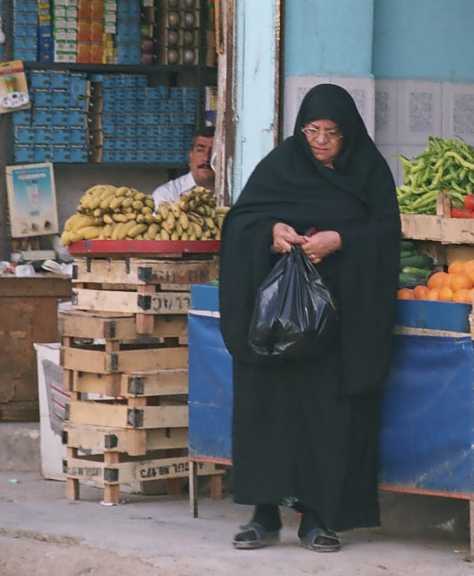
Note on new photos:
1. Picture of the site that was bombed in Achrafieh.
2. Pictures of the beach, Harrisa, Rouche, Rabieh, Hamra, W.Beirut, LAU, and AUB.
3. A few personal pictures with good friends.
Sunday, June 24, 2007
Dinner & Arak With Friends
Yesterday was my first full day in Lebanon. I slept about 3 hours in total, but had many adventures and met many interesting people. My first adventure was going outside of the LAU campus to get some coffee, water, sodas and some other assorted junk food. Afterwards a fellow student and myself took a stroll down to the Raouché (Pigeon Rocks). They are a spectacular formation of stone jutting out of the Mediterreanean, the water surrounding them is a mixture of teal, green, light blue, and a medium shade of blue I can only describe as "Azure Mediterreanean."
The stroll down to the Raouché was quite an interesting one. The school I am attending is in the heart of Quoritem, the bastion of Rafiq Hariri and his Future Movement (a March 14th associated political party and heavily anti-Syrian). As such, there is heavy security by both the army and police. On almost every major intersection one can find an M113 Armored Personel Carrier with a .50 caliber machine gun mounted atop its metal hull. To get to the Raouché you have to pass the Saudi embassy, which is a massive building loaded with private security and a battalion of soldiers outside. Because I am a free wheeling American I decided I would take some pictures of the APCs dotting the streets---BAD idea. I got yelled at repeadedly by the soldiers, although it seems if I just play the "dumb American" card I won't get my camera smashed.
Also, during the day, I stopped and found some nice little coffee shops, and had some of the best iced coffee in a place across from the school. Around 11 in the morning I gave a close Lebanese friend a call. She invited me over to her home for a dinner complete with the Lebanese specialty drink known as Arak (also spelled 3arak--the 3 is an ain in Arabic) . Arak is made of anise and is quite sweet, almost like drinking an incredibly sweet tequila without so much alchoholic bite.
After speaking with my friend she informed me that her boyfriend (who was playing soccer at the time) was going to pick me up around 9:30PM. As 9:30 passed I called her up again and she told me he would be there to pick me up around 10PM. I had little to do, so I sat in the guard house and talked with the guards. The guards told me that rent (per month) was around $700 a month, they earned around $1.30 an hour and they couldn't get over the fact that America had a minimum wage around $5.75-$7.00. I tried out my rudimentary Arabic/Lebanese with the guards and they seemed to get a kick out of it, teaching me a few new words and pronounciation. As 10 o'clock rolled around my friend's boyfriend pulled up with another person I am friendly with and we headed off to Rabieh.
Rabieh and Christian Beirut (and its suburbs) seem a lot more organized and clean as compared to the Muslim sections. Of course both Muslim and Christian Beirut have much alore, but that difference definately sets them apart. On the drive down to Rabieh we passed downtown Beirut. I was told that ever since Hizbollah started protesting the current government they were subsidizing poor Shia (giving them $3 a day) to squat in Martyr's Square. There is a joke that is going around (some of it is true according to photos I've seen) that these Hizbollah members brought their shishas (water pipes) and TVs with them---Now Martyr's Square is their new home. I was also told that to get down to Martyr's Square (which stradles the old Green Line seperating Christian and Muslim Beirut) one must go through, not one of the numerous Lebanese Army checkpoints, but a Hizbollah checkpoint. Yes, Hizbollah has people who "guard" their encampment in downtown Beirut, and they (not the government) allow people in and out.
As we entered Rabieh we pulled up to a nice looking apartment building. My friend had a beautiful home with a wonderful family. Politics was the talk of the night, and of course I felt as if I had center stage (its not everyday some random American walks through your door and wants to talk about inter-Christian/Sunni-Shi'ite politics). I had a wonderful meal prepared for me complete with native bread, salad, arak, and pleasantly spiced chicken just to name a few things served. After the meal we all sat down and watched the television, my friend's sister had an international phone so I gave my mother a quick call. I must say after a great dinner there are few things more amusing than to have Seinfeld with Arabic subtitles.
For some time I had been talking about trying to get as much political paraphenalia out of Lebanon as possible. My friend went through a huge poster collection and gave me a Lebanese flag, a Kataeb party flag (Kataeb is also known as the Phalange party, and are right wing, anti-Syrian). As I was driven home my hosts took me to the Bachir Gemayel memorial in Achrafieh. Bachir Gemayel, a hero to many Lebanese Christians, was the son of Kataeb founder Pierre Gemayel, founder and leader of the Lebanese Front and later Lebanese Forces, and was president elect of Lebanon in 1982 before an SSNP bomb killed him. I visited the very place he was murdered that night. Formerly it was an unspectacular apartment building, after the explosion flattened that building, it became a square with concrete floors, trees, and a memorial to Gemayel and those killed in the building. The square was mostly quiet, save for a few young men who jokingly wanted to cheer for George W. Bush because I was in the area. Large posters and a massive metal carving of Bachir Gemayel's figure adorned the building adjacent to the memorial and it reminded me of a modern day shrine. In Lebanon it seems that the whole city is one massive shrine to opposing/allied political leaders who were supported by their confessional group. Eventhough I have been here a day, you can tell what sectarian section of town you are in by the posters that are stuck to the walls: Rafiq Hariri for Sunni sections, Walid Jumblatt for the Druze, numerous Hizbollah "martyr posters" and pictures of Hassan Nasrallah for Shi'ite sections, and Bachir Gemayel and the recently assassinated Pierre Amin Gemayel for Christian areas.
All in all it was a very spectacular day/night filled with adventure and great conversation.
The stroll down to the Raouché was quite an interesting one. The school I am attending is in the heart of Quoritem, the bastion of Rafiq Hariri and his Future Movement (a March 14th associated political party and heavily anti-Syrian). As such, there is heavy security by both the army and police. On almost every major intersection one can find an M113 Armored Personel Carrier with a .50 caliber machine gun mounted atop its metal hull. To get to the Raouché you have to pass the Saudi embassy, which is a massive building loaded with private security and a battalion of soldiers outside. Because I am a free wheeling American I decided I would take some pictures of the APCs dotting the streets---BAD idea. I got yelled at repeadedly by the soldiers, although it seems if I just play the "dumb American" card I won't get my camera smashed.
Also, during the day, I stopped and found some nice little coffee shops, and had some of the best iced coffee in a place across from the school. Around 11 in the morning I gave a close Lebanese friend a call. She invited me over to her home for a dinner complete with the Lebanese specialty drink known as Arak (also spelled 3arak--the 3 is an ain in Arabic) . Arak is made of anise and is quite sweet, almost like drinking an incredibly sweet tequila without so much alchoholic bite.
After speaking with my friend she informed me that her boyfriend (who was playing soccer at the time) was going to pick me up around 9:30PM. As 9:30 passed I called her up again and she told me he would be there to pick me up around 10PM. I had little to do, so I sat in the guard house and talked with the guards. The guards told me that rent (per month) was around $700 a month, they earned around $1.30 an hour and they couldn't get over the fact that America had a minimum wage around $5.75-$7.00. I tried out my rudimentary Arabic/Lebanese with the guards and they seemed to get a kick out of it, teaching me a few new words and pronounciation. As 10 o'clock rolled around my friend's boyfriend pulled up with another person I am friendly with and we headed off to Rabieh.
Rabieh and Christian Beirut (and its suburbs) seem a lot more organized and clean as compared to the Muslim sections. Of course both Muslim and Christian Beirut have much alore, but that difference definately sets them apart. On the drive down to Rabieh we passed downtown Beirut. I was told that ever since Hizbollah started protesting the current government they were subsidizing poor Shia (giving them $3 a day) to squat in Martyr's Square. There is a joke that is going around (some of it is true according to photos I've seen) that these Hizbollah members brought their shishas (water pipes) and TVs with them---Now Martyr's Square is their new home. I was also told that to get down to Martyr's Square (which stradles the old Green Line seperating Christian and Muslim Beirut) one must go through, not one of the numerous Lebanese Army checkpoints, but a Hizbollah checkpoint. Yes, Hizbollah has people who "guard" their encampment in downtown Beirut, and they (not the government) allow people in and out.
As we entered Rabieh we pulled up to a nice looking apartment building. My friend had a beautiful home with a wonderful family. Politics was the talk of the night, and of course I felt as if I had center stage (its not everyday some random American walks through your door and wants to talk about inter-Christian/Sunni-Shi'ite politics). I had a wonderful meal prepared for me complete with native bread, salad, arak, and pleasantly spiced chicken just to name a few things served. After the meal we all sat down and watched the television, my friend's sister had an international phone so I gave my mother a quick call. I must say after a great dinner there are few things more amusing than to have Seinfeld with Arabic subtitles.
For some time I had been talking about trying to get as much political paraphenalia out of Lebanon as possible. My friend went through a huge poster collection and gave me a Lebanese flag, a Kataeb party flag (Kataeb is also known as the Phalange party, and are right wing, anti-Syrian). As I was driven home my hosts took me to the Bachir Gemayel memorial in Achrafieh. Bachir Gemayel, a hero to many Lebanese Christians, was the son of Kataeb founder Pierre Gemayel, founder and leader of the Lebanese Front and later Lebanese Forces, and was president elect of Lebanon in 1982 before an SSNP bomb killed him. I visited the very place he was murdered that night. Formerly it was an unspectacular apartment building, after the explosion flattened that building, it became a square with concrete floors, trees, and a memorial to Gemayel and those killed in the building. The square was mostly quiet, save for a few young men who jokingly wanted to cheer for George W. Bush because I was in the area. Large posters and a massive metal carving of Bachir Gemayel's figure adorned the building adjacent to the memorial and it reminded me of a modern day shrine. In Lebanon it seems that the whole city is one massive shrine to opposing/allied political leaders who were supported by their confessional group. Eventhough I have been here a day, you can tell what sectarian section of town you are in by the posters that are stuck to the walls: Rafiq Hariri for Sunni sections, Walid Jumblatt for the Druze, numerous Hizbollah "martyr posters" and pictures of Hassan Nasrallah for Shi'ite sections, and Bachir Gemayel and the recently assassinated Pierre Amin Gemayel for Christian areas.
All in all it was a very spectacular day/night filled with adventure and great conversation.
Subscribe to:
Posts (Atom)